

Introduction to Environment, Land, Water Management and Closure Planning over the Life of an Asset (LoA)
Time limit: 53 days
5 credits
Instructor: Dr Michael Just
Full course description

Improve closure outcomes in mining operations based on environmental principles.
In this micro-credential, you’ll discover how mining intersects with environmental responsibility and regulatory compliance, and how to manage stakeholder engagement. You’ll explore the challenges and risks of asset management and learn how to optimise closure outcomes, while addressing key environmental concerns.
This credential is particularly suitable for:
- Established mining industry professionals.
- Aspiring mining industry professionals.
- Mining industry service providers (eg finance, investment, consultancies).
- First Nations peoples.
By completing this credential, you will learn:
- how to identify, prioritise and manage closure risks
- the differences between positive and negative closure outcomes
- how to apply an integrated, multidisciplinary approach to closure
- how to discern the rightful claims and interests of key stakeholders and rightsholders
- the importance of community engagement
- strategies to enhance biodiversity after the closure of a mining asset
- the socio-environmental implications and risks of pit lakes
- how to manage environmental impact assessments and site investigations.
Key Topics
Your learning journey includes access to 8 online modules.
Module 1: Introduction to the Unit and the Curtin Learner Journey
Module 2: Asset Levers for Better Closure Outcomes
Module 3: Mine Planning Over LoA and OBK
Module 4: Water Management
Module 5: Landforms and Tailings
Module 6: Fundamental Processes, Risks, and Controls
Module 7: Environmental Impact Assessments and Site Investigations
Module 8: Biodiversity, Completion Criteria, and Rehabilitation Trials
Assessment(s)
To successfully complete this credential, you are required to pass a final assessment. To demonstrate what you have learned, you will develop a comprehensive report that critically analyses the integrated approach to Environment, Land, and Water Management (ELWM) and Closure Planning across the Life of an Asset (LoA).
“Fantastic course, well delivered and covers an array of important topics for those in mining roles. Pitched at a great level for those who know little about the topics, to some more intermediate level understanding. Well recommended for all!"
“The Introduction to Environment, Land, Water Management and Closure Planning over the Life of an Asset (LoA) course provided invaluable insights into the fundamental principles of mine closure, emphasising regulatory compliance, environmental rehabilitation, and socioeconomic transition. The course effectively highlighted the importance of early stakeholder engagement, particularly with Indigenous communities, ensuring a responsible and sustainable closure process. Learning from historical examples, many being local scenarios, allowed me to understand both challenges and best practices. This training has given me the practical knowledge to implement closure strategies that uphold environmental stewardship while fostering long-term economic opportunities for affected communities. Highly recommended!”
The following sessions will be held virtually.
-
Get Started Session: Monday 7th September 2026 (10AM AWST)
-
Live Session 1: Monday 21st September 2026 (10AM AWST)
-
Live Session 2: Monday 5th October 2026 (10AM AWST)
-
Live Session 2: Monday 12th October 2026 (10AM AWST)

Senior Lecturer/WA School of Mines, Curtin University.
Dr Barakos has devoted several years to research on the design, economic and technical feasibility, sustainable development, and closure of mining projects, with a particular focus on critical minerals. In response to the ongoing transformation of the mining industry and its transition towards greater digitalisation and automation, his recent research interests have expanded to include the automation and digitalisation of mining operations, as well as the digital transformation of the technical, economic, and environmental evaluation of mining projects.
His current research also explores the application of Internet of Things (IoT) technologies in mining operations, the digitalisation of mining project evaluation and decision-making processes, and the use of big data and advanced analytical methods in mineral commodity market analysis.
Dr Barakos has co-authored more than 50 peer-reviewed publications across a broad range of mining engineering and mineral resources research areas. He has substantial experience in both academia and industry, having also worked for several years as a consulting mining engineer supporting mining operations in Greece.
 Dr George Barakos

Research Fellow/School of Molecular and Life Sciences (MLS)
Dr Michael Just is a restoration ecologist at Curtin University, where he researches seed biology, plant propagation, and tissue culture to address the technical bottlenecks limiting ecological restoration outcomes in Western Australia. His work focuses on threatened ecological communities of the Swan Coastal Plain, including marri–Kingia woodlands, and spans seed dormancy characterisation, hydrothermal germination modelling, and ex situ seed collections.
Michael works closely with industry, government, and supply-chain partners, including mining and infrastructure proponents, to develop propagation pathways for species that are ecologically critical but commercially difficult to produce at scale. He has led restoration planning and species-supply strategy for major offset projects, including multi-decade rehabilitation programs governed by conservation agreements, and advises on tissue culture and seed enhancement initiatives for industry-funded research programs.
In addition to his research and consulting work, Michael coordinates undergraduate and postgraduate research training at Curtin University and supervises student projects in restoration ecology and plant science.

Senior Lecturer/WASM: Minerals, Energy and Chemical Engineering
Dr Apurna Ghosh has been actively involved in teaching and research for more than two decades. He is actively involved in teaching Mine Safety Management, Mine Planning and Design, Resource Estimation and Mining Systems at Curtin. Dr Apurna works in mine safety and environment and identifies the workplace risk factors in different mining set-up which are the key input parameters for workplace health and safety in mineral industry.
Dr Apurna has written over 50 technical articles of international standards which are the outcomes of his research work on mine safety. These include topics such as dust control which have prompted him to understand the plight of miners and their families in mineral industry.
He has also keen interest on Geoinformatics which includes generation of Digital Elevation Model for selection of suitable aquifer recharge sites, and monitoring of catchment area.

Project Manager/School of Molecular and Life Sciences (MLS)
Zane is a Waanyi Traditional Custodian of North West Queensland and has held leadership roles in a range of mining companies and infrastructure project development companies and in Indigenous corporations representing Native Title holders. He has an in-depth understanding and knowledge of the mining sector, processes, and operational drivers.
Aside from his role as a Project Lead Researcher at the Cooperative Research Centre for Transformations in Mining Economies (CRC TiME), Zane has served on a number of committees and represented Native Title interests across a range of national forums and is also a Research Fellow for the Faculty of Science and Engineering at Curtin University.
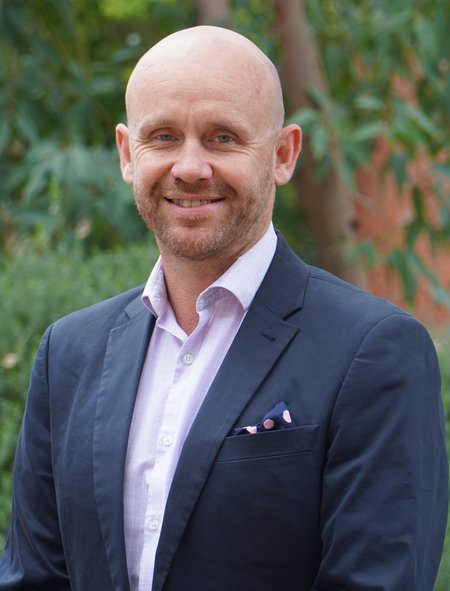
Interim Pro Vice-Chancellor/Faculty of Science and Engineering, Curtin University.
Chris Rawson is an environmental scientist whose career bridges cutting-edge research and innovative education. After completing a PhD in remediated site assessment at the University of Technology Sydney, Chris joined Curtin University in 2009 as a postdoctoral researcher, applying his expertise to the marine environments of Australia’s Northwest Shelf. His early research focused on understanding the presence and impacts of marine pollution, from dredging to oil and gas developments, on ecologically and commercially important fish populations.
In 2012, Chris transitioned into a combined teaching and research role, where he developed a reputation for connecting students with real-world, industry-facing challenges. Since 2015, he has held a series of senior leadership positions in learning and teaching, including Associate Dean (Learning and Teaching) for the School of Science, Science Curriculum Lead and Dean of Learning and Teaching for the Faculty of Science and Engineering.
Today, as Interim Pro Vice-Chancellor for Science and Engineering, Chris leads transformative initiatives that shape the student experience, foster interdisciplinary collaboration and build strong links between academia, industry and community. His work reflects a commitment to equipping the next generation of scientists and engineers with the skills and wisdom to tackle the world’s most pressing challenges.
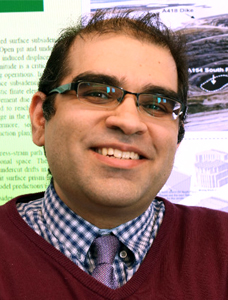
Lecturer/WASM: Minerals, Energy and Chemical Engineering
Dr Mohammadali (Ali) Sepehri is a Lecturer at Curtin University. He received his PhD and MSc degrees in Mining Engineering focused on advanced Geomechanical numerical modelling from the University of Alberta, Canada. Ali is a Professional Mining Engineer (P.Eng) with strong academic and industrial research experience in Geomechanics. He has been involved in many geomechanical mining projects, including open pit and underground mine stability design, ground control and stability assessments, ground support design, geomechanical monitoring and instrumentation, prediction of mining-induced surface subsidence, validation and verification of advanced 3D geomechanical numerical models.
His main research interest is in the field of Geomechanics, including rock engineering design, slope stability, Geotechnical Aspects of Mine Tailings, Underground Thermal Energy Storage, and numerical modelling.
Once you successfully complete and pass the final assessment, you'll earn a digital badge that is instantly shareable to your social networks (including LinkedIn), which showcases your new skills and knowledge mastery.
This credential allows you to acquire intermediate knowledge and skills in a discipline. This credential usually requires you to have some related prior learning or experience.
You will also earn 5 credit points, which are in line with Australian Qualification Framework Level 8 criteria, ensuring comprehensive theoretical and/or technical knowledge of the credential. 100 credit points are required to earn a Graduate Certificate at Curtin.
Curtin Credentials focus on five themes, which have been carefully curated based on what's most relevant and valuable to professionals today, and in the future. This credential fits within the following theme:

Thrive and adapt in the changing world of work by developing and broadening your skillset in a range of areas including work design and cognitive flexibility.
Need help with this credential? Email sustainableclosure@curtin.edu.au for questions specific to this course or the Sustainable Mine Closure Program.
Alternatively, please call Curtin Connect at 1300 222 888 or contact curtincredentials@curtin.edu.au for all other Curtin Credentials enquiries.
*Curtin may cancel or reschedule a credential at any time and for any reason as it sees fit. The Start Date and the other details of this credential are provided as a general guide only and may change from time to time.
✝This credential involves 30 hours of online resources, readings, activities and assessments. However, to pass and earn 5 credit points, you may need to commit further time.
^Learning is done completely online.
§Price subject to change. Please check price at time of purchase.


Start: 7th September 2026*

Duration: 30 hours✝

Delivery Mode:
Online Modules & Live Online Masterclasses^

Price: $2269 excl.GST§

Print Version: Download